

Description
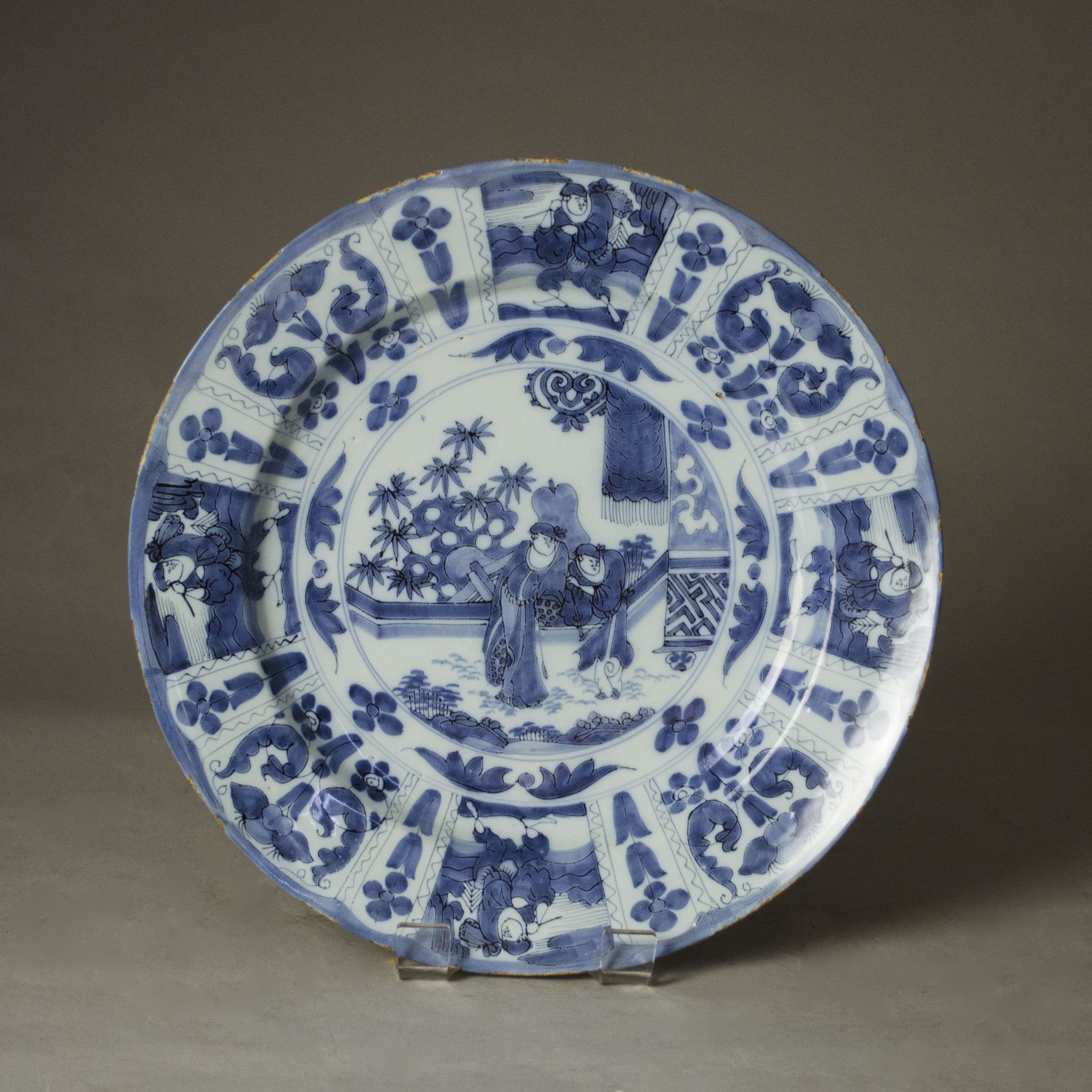
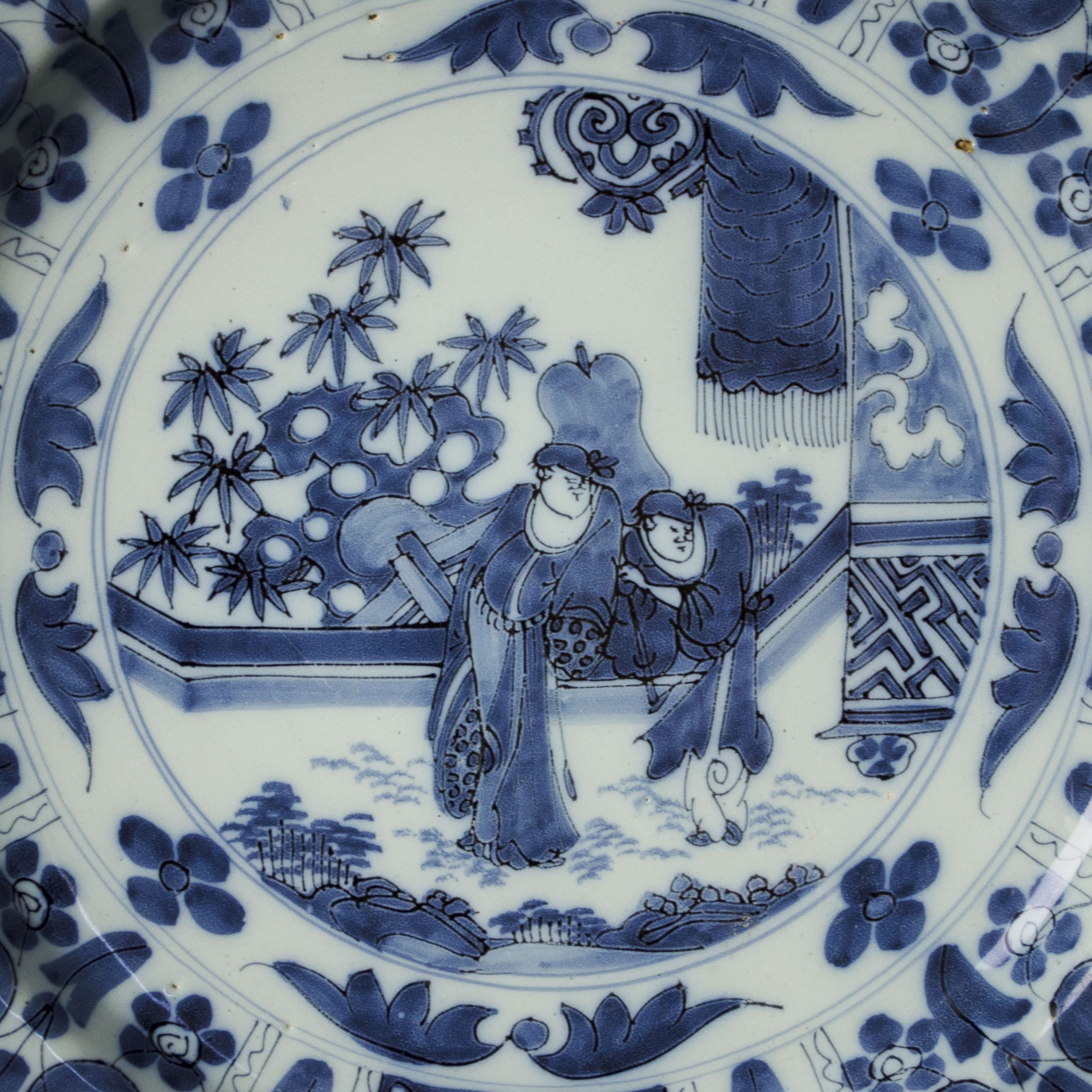
Chinese porcelain was imported into Holland in great quantities by the Dutch East India company between 1600 and 1800. The model for this particular Delft pattern came from Wanli wares specifically marketed to the Europeans and originally to the Portuguese traders who gave the nickname Kraak after the carrack ships which carried their goods across the oceans in the late 16th century. The extremely fine potting of the dishes and the delicate and decorative painting in strong blues created a genre which acted as a blueprint for the new Delft factories which sprung up in the mid 17th century.
It is estimated that several million pieces of Chinese porcelain arrived at this period and made a tempting target for the local Delft craftsmen who competed for the ceramics market. In some cases, Delft pieces are so close to the Chinese originals that they can be difficult to distinguish without actual handling. Some dishes are known to have been made as replacements or extensions to Chinese services which have become damaged beyond repair and so are exact replicas.
In this case, the design can be traced to an as yet unidentified factory in Delft, whose patterns and painting style are repeated across dishes of various sizes but always in the Kraak style.


