


Description
Karl Kaspar von der Leyen-Hohengeroldseck (1618-1676)
Karl Kaspar was chosen as successor to Archbishop Phillipp Christoph in 1652 and became Archbishop Elector of Trier, in effect the Princely ruler of a large state of the Holy Roman Empire. A position of great polical strength and tension within northern Europe, a state which in earlier centuries stretched through Burgundy to the key Roman city of Arles.
Karl Kaspar had the task of post war rebuilding following the end of the 30 Year’s War in 1648 and the fracture of the Empire along religious lines to accomodate the rise of Protestantism and Reformation. The decimation of the population by up to 50% and destruction of key infrastucture in Triers required strength as a ruler. The Archbishop Elector picked members of his close family for key roles, and particlarly his brother, Damian Hatard in 1654 as Archdeacon of Karden as a stepping stone to placing him in 1675 as Archbishop of Mainz, perhaps the most important cathedral of the medieval period.
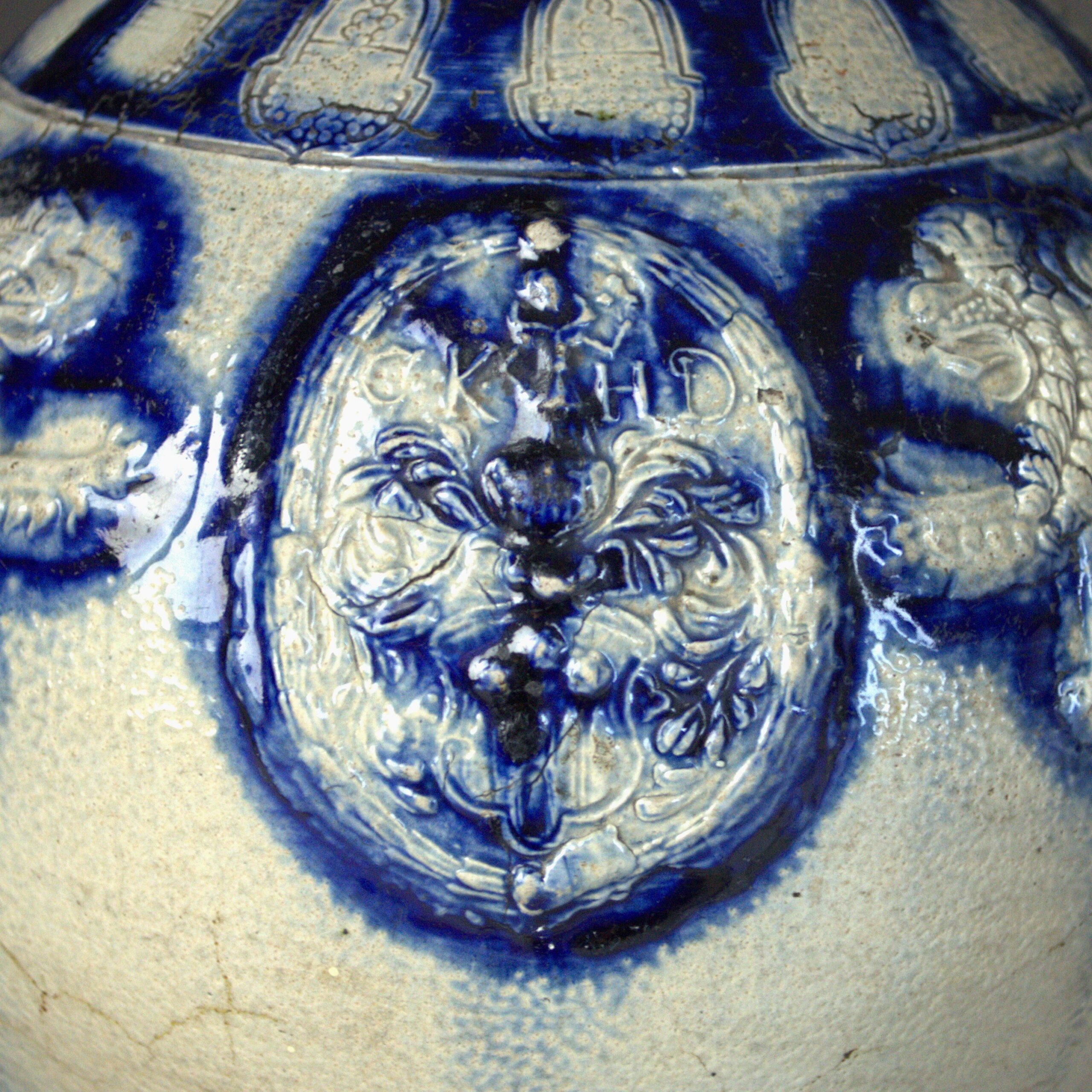
This jug displays armorial medallions of Karl Kaspar to each side with the central armorial believed to be that of Damian Hatard 1624-1678, supported by crowned lions. This iconography is intended to strengthen the image of the newly appointed Archdeacon and to prepare the way for his rise in the management of the state and his eventual position as Archbishop of Mainz and Bishop of Worms.
A group of Westerwald jugs or flagons with this distinctive shape and spatial design are associated with the factory of Jan Emens Mennicken whose initials and date have been found on medallions. The moulds or sprigs for applied decoration were owned by the factory and had the possibility of being reused in many configurations. Though we are aware of medallions of this family, so far we have not seen identical layout and colouring.
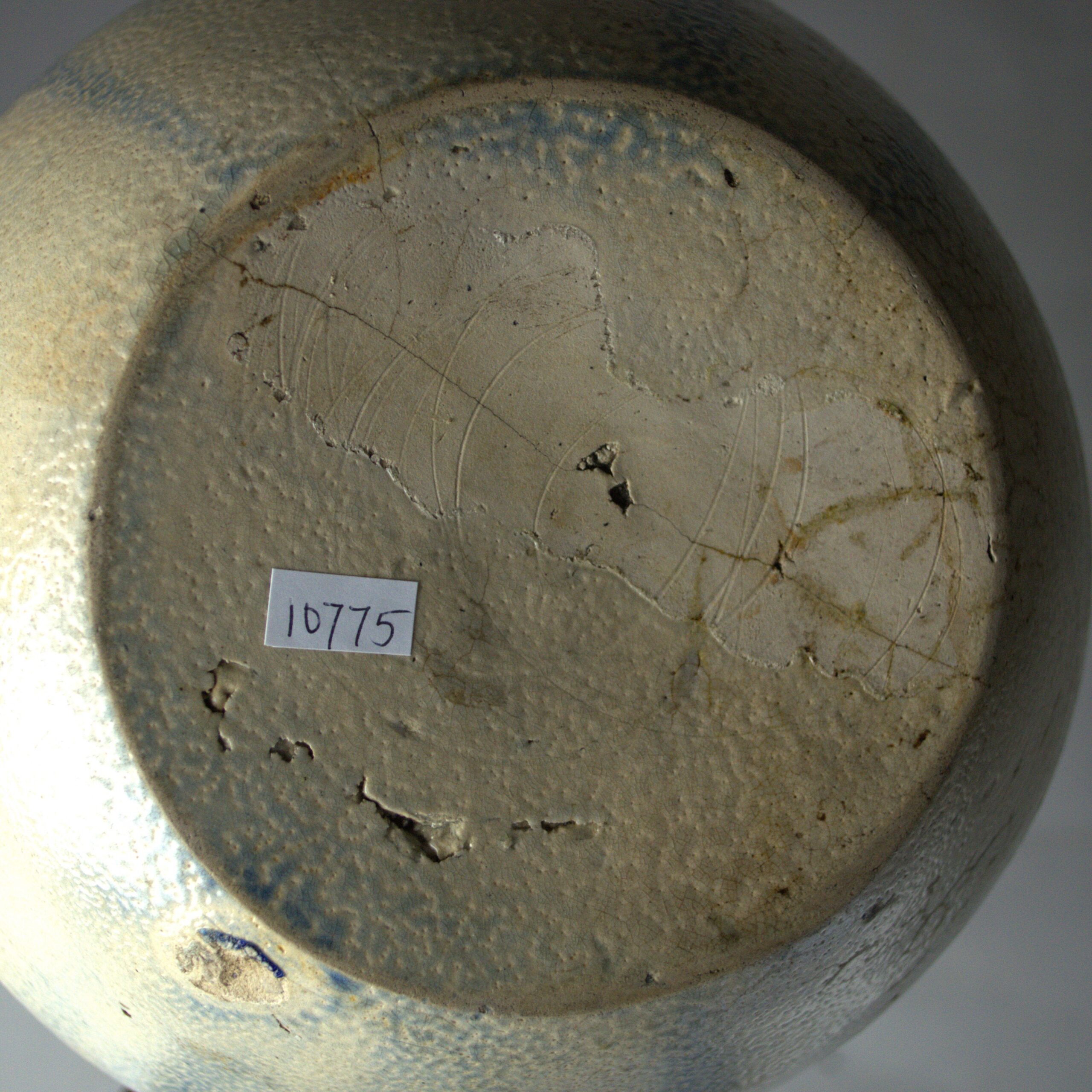
Originally with a hinged pewter lid, now missing, the jug is intact but with a rim chip and areas of fine cracks. Though presumably made in reasonably large numbers, few large vessels from this period have survived as broken flagons were simply discarded.