Description
The history of and technique of veneering really begins with the Netherlands and the Dutch Republic. The monopoly of the Dutch East India Company on trade with Africa, India and Asia ensured that during the 17th century, the world supply of rare or exotic timbers landed in the Dutch ports.
The great cost of these woods, shipped as logs, made the cabinetmakers experiment by slicing with fret saws into 3-4 mm thicknesses. These could then be glued as veneers to cheaper local timber, oak, pine and beech, a process mastered by Herman Doomer (1595-1650) of Amsterdam,the greatest Dutch technician.
The supremacy of the Dutch in this respect has been forgotten to some extent, but the entire skill base of French, English, German cabinetmaking during the 17th and 18th centuries was provided by a Dutch émigré workforce. Without them, the greatest achievements of craftsmanship would not have been possible.
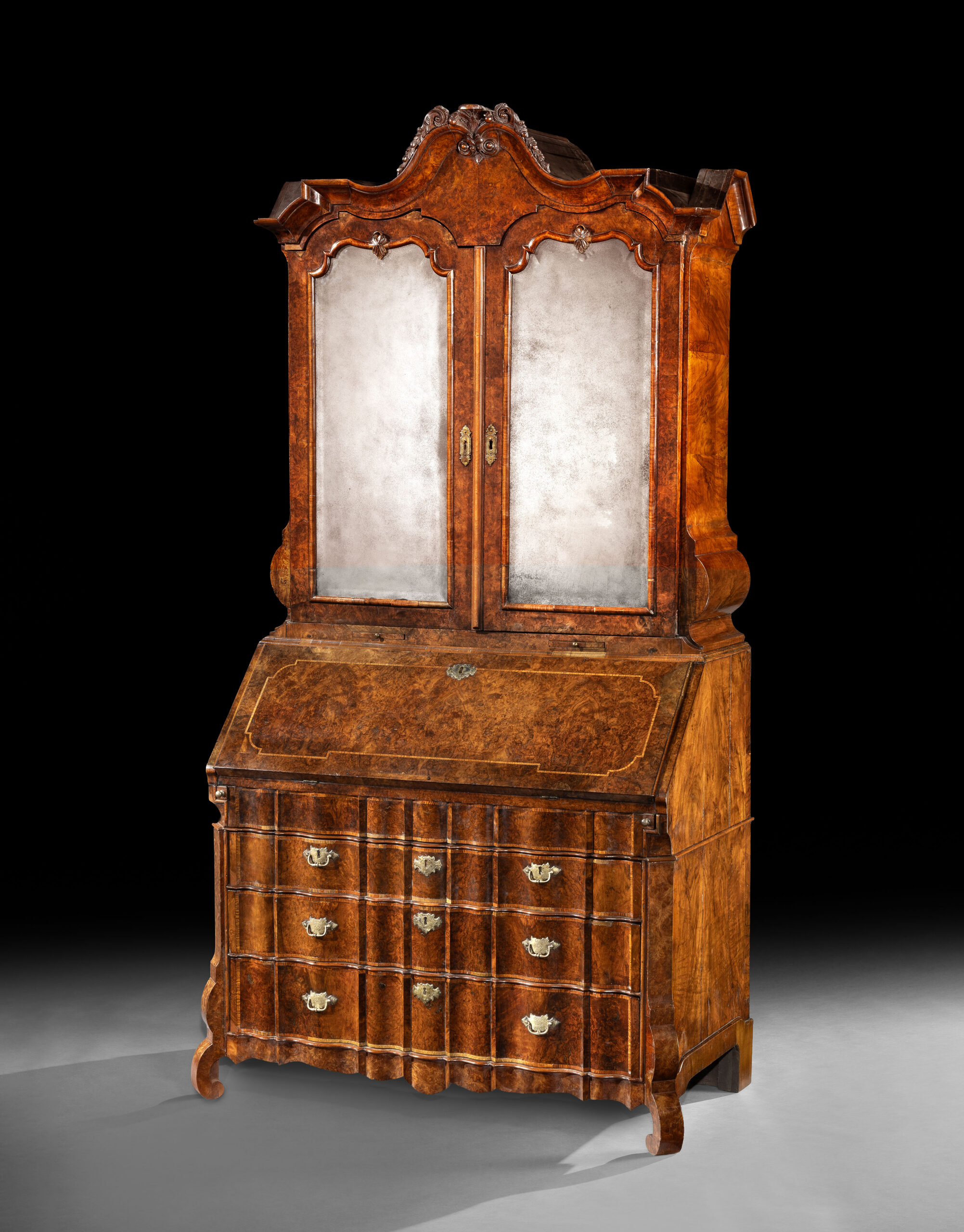
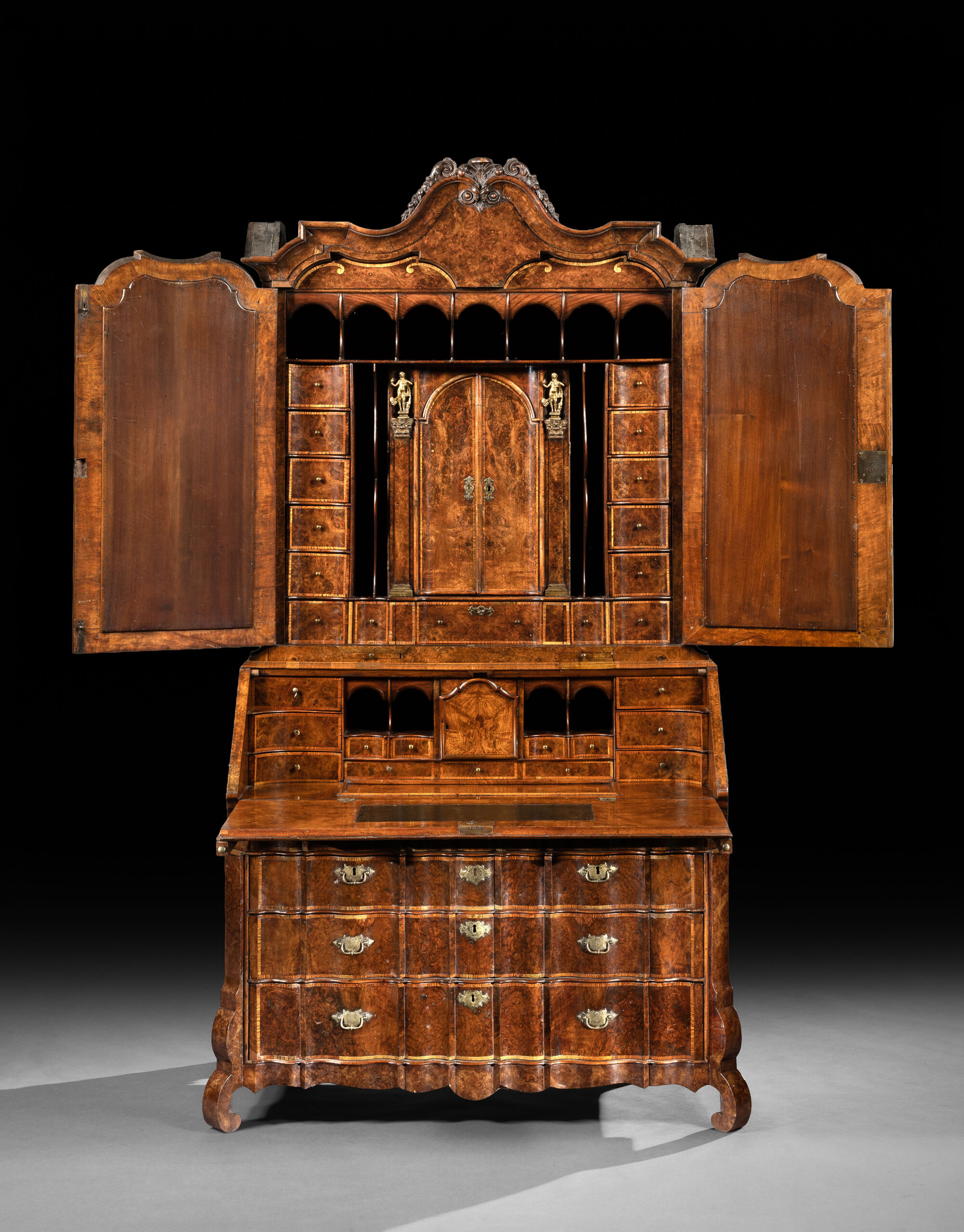
Returning to this cabinet, the tight curly grain of burr walnut is the result of slicing veneers from the lumps of burr wood (on the trunk of the tree), gluing them into large sheets and fixing to the carcase. Then, polishing, staining and waxing over a period of months.
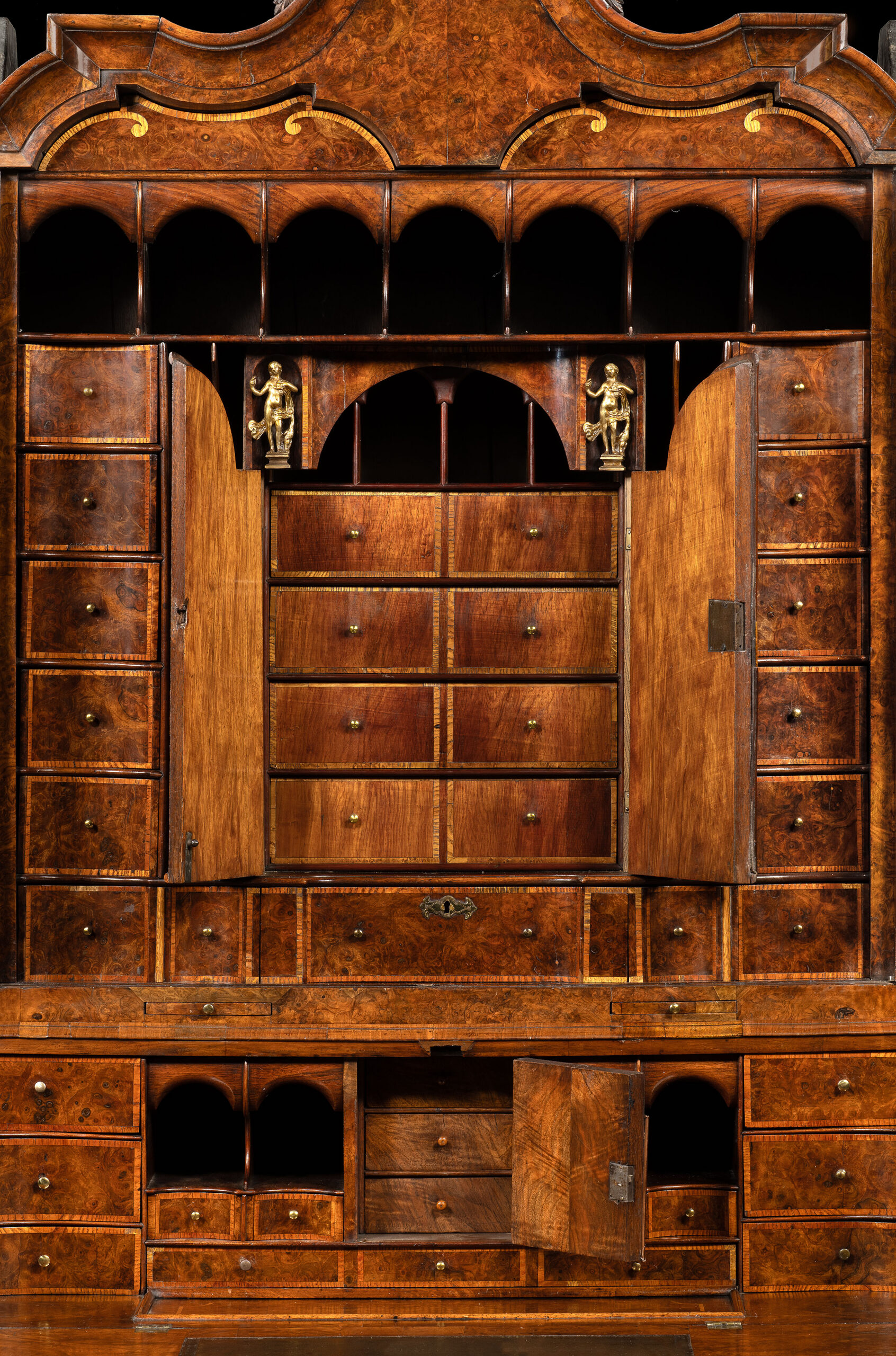
The interior fitting of both the bureau and cabinet sections, are perhaps the best that was produced in this period of 1730-1740. Almost every drawer is curved and veneered in burr walnut with an elm border, even the double door to the cabinet is arched and shaped and reveals drawers of Indonesian rosewood.
There is barely a straight line to the interior fitting and the complexity of this for a cabinet maker would have greatly appealed to the original client who commissioned it. There are also several secret drawers with sprung catches and slides which were probably more for the amusement of the owner than to guard against theft.
The upper cornice has an extravagant, shaped outline with carved cresting which was a trademark of Amsterdam work in this early Regence period, with five small platforms for the display of vases or figures popular among Dutch collectors. As these cabinets would normally be kept locked, these vases would have been an outward expression of the splendour which might be seen inside and this bureau would have been treated like a collectors cabinet- to be revealed to the wonderment of visitors to the zaal.